Understanding Tooth Sensitivity – Causes & Treatments
- Harkirat Aulakh
- Mar 2
- 8 min read

Why Are My Teeth Sensitive?
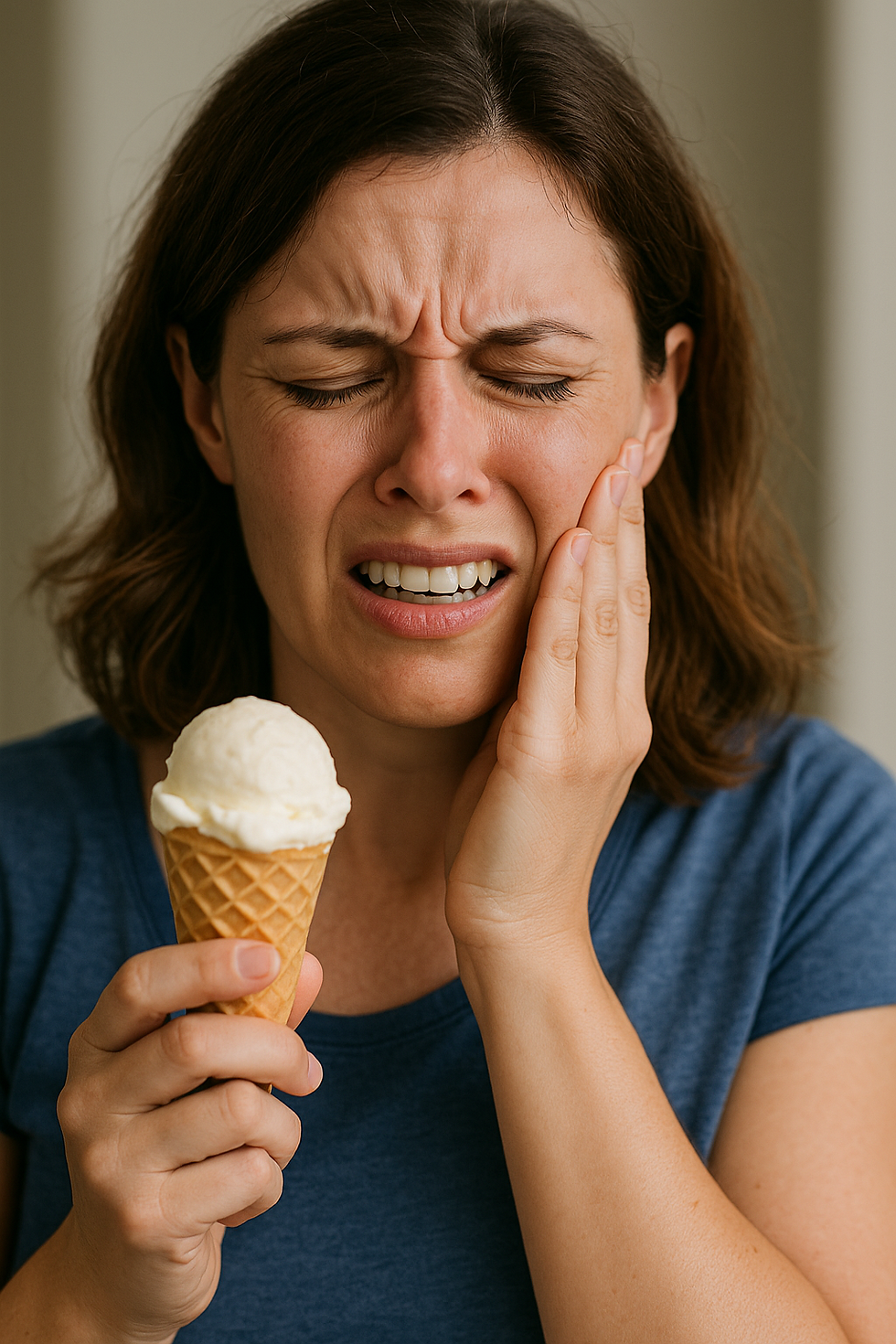
If a sip of iced water or hot coffee makes you wince in pain, you might be dealing with tooth sensitivity. Many people ask, “Why are my teeth sensitive?” Tooth sensitivity (dentin hypersensitivity) is very common – affecting roughly 1 in 8 adults – and it happens when the protective layers of your teeth become worn or compromised, exposing the softer dentin layer underneath. When dentin is exposed, tiny tubules in the tooth allow sensations (temperature changes or sweet stimuli) to reach the nerve, causing that sudden, sharp zing of pain.
Common causes of sensitive teeth include:
Enamel erosion: The hard enamel can wear down from years of use or acidic diets. Consuming lots of acidic foods and drinks (like citrus, soda, or pickles) gradually erodes enamel, thinning your tooth’s protective layer.
Gum recession: When gums pull back (often from gum disease or aggressive brushing), they expose the tooth’s root surface, which lacks enamel and is very sensitive. Thin or receding gum tissue is a major trigger for sensitivity.
Tooth decay or damage: A cavity or a cracked tooth can directly expose the inner dentin or nerve, leading to intense sensitivity. Even a worn filling that no longer seals the tooth can cause “leaks” that hurt with cold or sweets.
Teeth grinding (bruxism): Clenching or grinding your teeth — especially at night — gradually wears down enamel and can expose dentin. Grinding may also cause micro-cracks in teeth, making them more sensitive over time.
Over brushing or hard brushing: Brushing too hard or using a hard-bristled toothbrush can wear away enamel and contribute to gum recession. This is why dentists recommend gentle brushing with a soft brush.
Acidic diet and habits: Frequently sipping on soda, sports drinks, or wine and even using certain acidic mouthwashes can erode enamel and worsen sensitivity. Similarly, chronic acid reflux or frequent vomiting (as in acid reflux disease or bulimia) can bathe teeth in acid and cause enamel loss.
Dr. Aulakh’s Note: Tooth sensitivity is essentially your tooth’s way of saying its protective shield is compromised. At Profile Dental, I always tell patients that figuring out the exact cause of sensitivity is the first step – whether it’s a tiny cavity starting, receding gums, or simply enamel wear from daily habits. Once we pinpoint the cause, we can address it and strengthen your teeth to reduce that zinging pain.
What Triggers Tooth Sensitivity Pain?
When the underlying dentin of a tooth is exposed, everyday things can trigger pain. You’ll typically feel a short, sharp pain in response to certain stimuli. Common triggers for sensitive teeth include:
Cold foods & drinks: Ice water, cold soda, ice cream, or even breathing in cold air on a winter day can send a jolt of pain through a sensitive tooth.
Hot foods & beverages: That first sip of hot coffee or a spoonful of hot soup can equally trigger a twinge if your dentin is exposed.
Sweet or sugary foods: Ever get a zing from a sugary candy or dessert? Exposed dentin allows sugar to reach the nerve, causing pain Sweet foods (and particularly sour candies, which are both sweet and acidic) are common culprits.
Touch or pressure: You might even feel sensitivity when brushing your teeth, flossing, or biting down, especially if the tooth’s root area is exposed. Even a burst of air from your dentist’s instruments can make you jump if you have sensitive spots.
If you’re experiencing these triggers regularly, it’s a sign that tooth sensitivity is present and needs addressing. According to the Cleveland Clinic, whenever your teeth hurt with hot, cold, or sweet contact, you should talk to a dentist about it. The good news is that sensitivity can almost always be reduced or managed with proper care.
How Can I Treat Sensitive Teeth?
You don’t have to just “live with” tooth sensitivity! There are several effective treatments and home-care approaches that can significantly reduce or eliminate that sharp discomfort. At Profile Dental, Dr. Harkirat Kaur Aulakh will first examine your teeth to identify any underlying issues (for example, a cavity, crack, or gum infection) because treating those problems is key to relief. Once serious issues are ruled out or treated, we can focus on desensitizing your teeth. If you’ve been searching for a tooth pain cold hot treatment or asking how to soothe sensitive teeth, here are solutions we often recommend:
Desensitizing toothpaste: A special toothpaste for sensitive teeth (available over the counter, e.g. Sensodyne) can help block the pain signals from exposed nerves over time. These toothpastes often contain ingredients like potassium nitrate or stannous fluoride that calm the tooth’s nerve response. Use it in place of your regular toothpaste twice daily. (Tip: You can even dab a bit directly onto a sensitive spot at night before bed for extra relief.) Give it a couple of weeks to feel the full effects.
Fluoride treatments: Fluoride varnish or gel applied by a dentist strengthens the enamel and dentin of your teeth. In-office fluoride treatments can significantly reduce sensitivity by making your teeth more resistant to those hot, cold, and sweet triggers. Dr. Aulakh might also prescribe a high-fluoride toothpaste or rinse for you to use at home for ongoing enamel support.
Dental bonding or sealants: For teeth with exposed root surfaces, a quick fix is applying a bonding agent (a tooth-colored resin) to cover the exposed area. This acts like a protective coat, sealing off the dentin so external stimuli can’t reach the nerve as easily. Bonding is a simple, non-invasive procedure that can immediately shield sensitive spots.
Mouthguard for grinding: If grinding your teeth at night (bruxism) is wearing down your enamel, a custom night guard can be a game-changer. This is a comfortable acrylic tray you wear over your teeth during sleep to prevent the damage from grinding. By stopping the grind, you’ll halt further enamel loss (and often improve your sleep and jaw comfort too!). Mayo Clinic experts note that night guards protect against tooth damage and sensitivity if you grind your teeth.
Gum graft surgery (if needed): In advanced cases of gum recession, we may recommend a gum graft. This procedure takes a small piece of gum tissue (either from another area of your mouth or a donor source) and places it over the exposed root. A successful gum graft covers the bare root, protecting it and often reducing sensitivity in that area. Gum grafts are only for severe recession, but they can restore both comfort and appearance for your teeth.
Other dental treatments: If your sensitivity is due to a specific problem like a cavity or a cracked tooth, treating that issue will be the priority. That could mean filling a cavity, replacing a leaky filling, or putting a crown on a cracked tooth. Once the problem is fixed, the sensitivity usually resolves. In cases of chronic sensitivity, Dr. Aulakh might also apply a dentin sealant or a specialized medicated toothpaste/gel in-office to further fortify sensitive areas.
In addition to these treatments, preventive care is crucial. Continue to brush gently with a soft toothbrush and use a fluoride toothpaste regularly to protect your enamel. Try to moderate acidic foods and drinks – for example, use a straw for sodas or rinse your mouth with water after consuming acidic or sugary treats. And don’t ignore ongoing pain: if a sensitive tooth suddenly feels worse or is keeping you up at night, it could signal a deeper issue that needs prompt dental care.
Tooth Sensitivity Treatment in Elk Grove, CA
Dealing with tooth sensitivity in Elk Grove? You’re in caring hands with Dr. Harkirat Kaur Aulakh at Profile Dental. As a highly experienced Elk Grove dentist, Dr. Aulakh has helped countless patients find relief from sensitive teeth. We start with a thorough exam to determine why your teeth are sensitive, then tailor a treatment plan to fix the root cause and strengthen your teeth. Our goal is to get you back to enjoying ice-cold drinks 🥤 or hot coffee ☕ without the pain!
Local Care, Personal Touch: Profile Dental is proud to serve the Elk Grove community and surrounding areas in Sacramento County. We understand that life is busy – so we offer convenient evening and Saturday appointments, making it easier for you to get care after work or on the weekend. Our office is centrally located in Elk Grove (with easy access from neighboring communities), so visiting the dentist is hassle-free.
Insurance & Comfort: We accept PPO insurance plans and work with you to maximize your benefits for sensitivity treatments. Nervous about dental visits? Our friendly team will put you at ease with our gentle approach (we even have free sedation options for anxious patients, ensuring comfortable care for everyone). At Profile Dental, your comfort and oral health are our top priorities.
Don’t suffer with sensitive teeth in silence. Whether your teeth hurt from cold air or sweet treats, Dr. Aulakh and the Profile Dental team have effective solutions to help. Contact us today to schedule an appointment – and take the first step toward a life where you can smile and enjoy your favorite foods pain-free!
FAQ: Frequently Asked Questions About Sensitive Teeth
Q: Why do my teeth hurt with cold or hot foods?
A: Tooth pain from cold or hot foods usually means the tooth’s dentin layer is exposed. When enamel thins out or gums recede, hot and cold temperatures can reach the tooth’s nerve more easily, causing a quick, sharp jolt of painmy.clevelandclinic.org. It’s a common sign of tooth sensitivity (not necessarily a cavity). Using a desensitizing toothpaste and getting a checkup with your dentist can help identify the cause and reduce this pain.
Q: Can tooth sensitivity go away on its own?
A: Sometimes, mild tooth sensitivity can improve on its own – especially if it was caused by a recent dental procedure or if you adjust habits (like brushing gentler or avoiding acidic drinks). However, if sensitivity persists or is very painful, don’t ignore it. Ongoing sensitivity often needs treatment, like a fluoride application or a protective bonding, to fully resolve. And if the pain is getting worse, see a dentist to rule out issues like a deep cavity or crack.
Q: What is the best toothpaste for sensitive teeth?
A: Look for a desensitizing toothpaste with ingredients such as potassium nitrate or stannous fluoride (for example, Sensodyne, Colgate Sensitive, or similar brands). These compounds help block the sensation from traveling to the nerve, dulling the pain over time. Also ensure the toothpaste has fluoride to strengthen enamel. It usually takes daily use for a couple of weeks to notice improvement. Continue using it long-term if you’re prone to sensitivity. And remember to use a soft-bristled toothbrush, since hard brushes can worsen sensitivity.
Q: When should I see a dentist about sensitive teeth?A: If you have ongoing or severe sensitivity that isn’t improving, you should see a dentist. In particular, make a dental appointment if your teeth hurt every time you eat or drink something cold, hot, or sweet, or if brushing is painful. These could be signs of a treatable problem like a cavity, significant enamel wear, or gum recession that needs professional care. Dr. Aulakh can determine if a simple fix (like a filling or fluoride treatment) will alleviate the pain or if a more involved treatment is needed. It’s always better to get it checked – you shouldn’t have to live with daily tooth pain!


Comments